
Green Clinic field note
Insect pests of pines: how to identify them?

Pines are beautiful and useful trees that are a feature of our forests, parks and gardens. However, pines are also attractive to many insect pests that can cause serious damage.
In this article, we will talk about the most common insect pests of pines and how to easily identify them to protect the trees in time, saving you effort, time and money.
It is possible to distinguish the most common types of insect pests for pines:
- Lat. Hylobius abietis it is a small black insect with red spots on its wings that feeds on pine needles. The beetles gnaw on the needles from both sides, and their larvae make passages under the bark, disrupting the tree’s sap flow. The Pine Beetle ёcan destroy complete stands of pine trees, especially young and weakened trees. The beetles appear in late May – early June and are active until mid-July. They lay eggs in the needles, from which larvae hatch in 10-15 days. The larvae live in the needles for 2-3 weeks and then turn into pupae. New beetles emerge from the pupae, which overwinter under the bark of trees or in the soil.
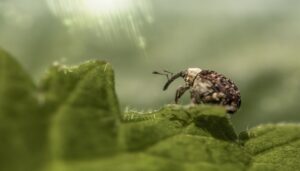
Lat. Hylobius abietis
- Lat: Diprion pini It is a large yellow insect with black stripes on its body that belongs to the wasp family. Female sawflies lay their eggs in the needles of pine trees, and their larvae live in tunnels that they gnaw into the needles. The activity of the Diprion pini can lead to the drying and falling of needles, as well as to a decrease in the winter hardiness of trees. They are most likely to settle in young pine trees; they most often live in pine and mixed forests.

Larvae of the Diprion pini
- Lat: Scolytinae It is a small brown insect that belongs to the weevil family. Pine bark beetles eat the bark of pine trees, and their larvae live under the bark, chewing on the wood. Pine bark beetle can cause the death of branches, the formation of resinous sores on the bark, and the death of trees. To prevent this pest, you should carry out sanitary pruning and clean the bark from lichens and moss.

Scolytinae


The following damage to pines is usually caused by insect pests.
- Damaged needles. Pine needles damaged by the Diprion pini have specific features: it becomes yellow, dry, brittle and falls off.The needles may show entrance holes with resin protruding from it, as well as tunnels that have been gnawed by the larvae. Damaged needles are usually found on the lower branches of the tree, but can also spread higher up.
- Damaged bark. It becomes dark in colour, cracks and peels off. Under the bark, you can see the passages that wasps make for wintering, as well as ulcers that form as a result of wasps emerging from pupae. Damaged bark is usually located on the lower part of the trunk.
Next, let’s talk about the negative consequences for pine trees as a result of insect pests.
- Reduction of decorative effect. Pine trees that have been attacked by the Diprion pini lose their decorative effect as their needles turn yellow, dry and fall off. Such trees look unhealthy and unattractive.
- Reduced photosynthesis. Such trees produce less oxygen and organic matter, thus affecting their growth and development.
Reduced yields. Such trees produce fewer cones and seeds, which affects their reproduction and distribution.
- Reduced resistance to cold weather. Such trees become more vulnerable to low temperatures and can dry out if the damage has reached a critical level, affecting the trees viability.
. You may not be even aware of the activity of insect pests until the results of their destructive activity become visible and noticeable on the branches or trunks of pine trees. If you notice such signs on the trees, the best solution is to contact us, because our team of specialists will take care of your green spaces and will provide the most effective solution to the problem.
Of course, this list of insect pests of pines can be continued, so we will certainly tell you about other species in future articles.