
Green Clinic field note
The red pine sawfly Neodiprion sertifer. Consequences for pine trees
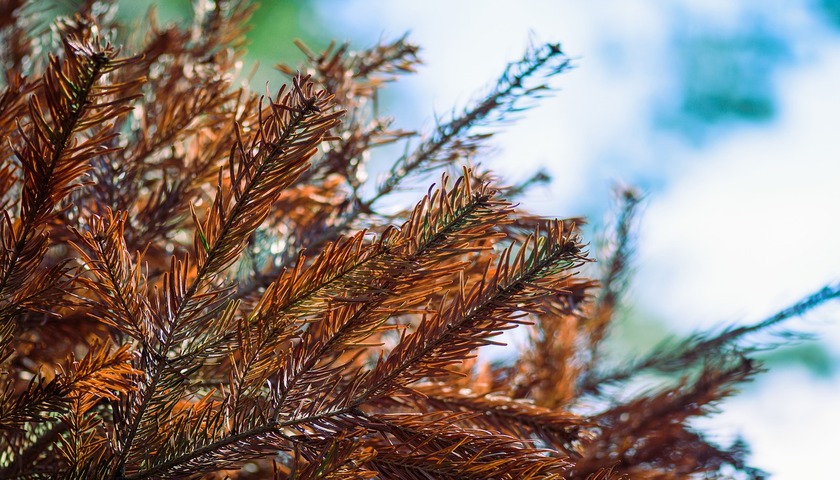
The red pine sawfly Neodiprion sertifer is an insect from the group of sawfly that feeds on pine needles. This insect is one of the most widespread and dangerous pine pests in Ukraine and other countries. The activity of the red pine sawfly can lead to significant losses for forestry, as it damages needles, reduces the productivity and quality of wood, and contributes to the development of other diseases and pests of pine. In this article, we will concentrate on the causes, signs, and consequences of the red pine beetle for pine trees.
How to identify the red pine sawfly?
The red pine sawfly is an insect from the class Insecta, order Beetles, family Sawflies. This insect has a long and curved snout with mouthparts at the end. The body of the insect is red or brown in color, with a body length of 6-8 mm. The female lays 10-15 eggs in a cut made by the ovipositor in old needles. Larvae hatch from the eggs and feed on pine needles. The larvae are yellowish-green in colour, with a body length of 15-20 mm. The larvae turn into pupae that live in cocoons under the needles. Adults hatch from the pupae and feed on pine needle pollen. The insect’s development cycle lasts one year.
The red pine sawfly carries the spores of the fungus Ophiostoma brunneo-ciliatum on its body. The fungus lives in the insect’s body and is transferred to new plants. When the insect moves to another tree, it bites through the needles and thus infects it with fungal spores, which penetrate the tree’s blood vessels and block them, leading to the drying up and death of the pine tree.
Signs of activity of the red pine sawfly?
The signs of the red pine sawfly depend on the developmental stage of the insect and the age of the pine tree. In spring and early summer, elongated orange pads of ecidium appear on seedlings, saplings and young shoots of pine trees, protruding from under the torn epidermis of the plant. It looks like a swelling arranged in a chain. In case of severe damage, the needles become bent, yellow and fall off. Ecidiums, which look like bumps or scars, can form on the pine trunk.
On full-grown pine trees, yellow or brown spots appear on the needles in summer and autumn, which gradually grow larger and merge. The needles lose their elasticity, become dry and brittle. The needles fall off, leaving bare shoots. The tree becomes weakened and more vulnerable to other diseases and pests. The red pine sawfly has natural enemies – its larvae are fed by forest ants – Formica sp, bedbugs, spiders.
What are the consequences of the red pine beetle for pine trees?
The red pine sawfly has a negative impact on pine trees because it damages the needles, which are the main organ of photosynthesis and respiration of the plant. Damaged needles cannot effectively perform their functions, which leads to a decrease in productivity and wood quality, as well as a decrease in the aesthetic value of the tree.
The red pine sawfly also contributes to the development of other pine diseases and pests such as Ips acuminatus, Melampsoma pinitorqua Rostr, pine rot, pine moth, etc. These diseases and pests increase the damage to the pine tree, which can lead to its death. The red pine beetle also has a negative impact on the ecosystem, as it reduces biodiversity, disrupts the balance between plants and animals, and reduces the ecological sustainability and productivity of the forest.