Skip to content
ZELENA KLINIKA
UA RU EN
Get a consultation

Archive

Category: Green clinic informs!

Photo by Syngenta.

October 1, 2024

Let’s protect Ukraine’s chestnuts together

Chestnuts have become a real symbol and decoration of the capital of Ukraine, but these magnificent trees are under threat from a dangerous pest – the woodworm. As a result of the damage, chestnuts can not only lose their aesthetic appearance, but also gradually die over the years. Syngenta’s specialists managed to find a successful […]

Covering the base of the pine trunk with soil

September 11, 2024

Consequences of covering the base of a pine trunk with soil

Covering  the base of a pine trunk with soil is a common problem, which is also called ‘Root collar deepening’.  In this article, we will consider what it is and what consequences it has for pine trees. What is root collar burying? Burying the root collar or covering the base of the pine trunk with […]

September 6, 2024

How to avoid damage to the root systems of pine trees when laying paths?

Pine trees are a real decoration of the urban landscape and ecosystem. The health of the pine root system is important not only for nourishing the plant so that it receives enough nutrients for growth and development, but also for its reliable anchoring in the soil. During the construction of paths and other construction works, […]

Mackintosh effect

August 20, 2024

Mackintosh effect: Implications for pine trees

Pine trees on the plot where you intend to build your house are not only a pleasant coolness and shade in summer, fresh air enriched with healing properties and intoxicating aroma of pine needles, but also an important part of the ecosystem, because pine trees are able to ‘produce’ oxygen throughout the year. It is […]

August 1, 2024

Jet attack of trunk bark by irrigation systems

Water is the lifeblood of any landscape ecosystem, and effective irrigation is crucial for balanced plant growth and development. However, as technology advances, certain unintended consequences can arise. One such problem is the “jet attack” of the trunk bark by irrigation systems. This phenomenon occurs when water jets during irrigation affect the trunk bark from […]

The effects of heat on the pine tree

July 26, 2024

Why does pine dry out and turn yellow in the heat?

Pine is a plant often associated with strength and endurance, but it often dries up and turns yellow in the heat. In summer, when temperatures rise, a decrease in turgor is the first sign of plant stress. This can be caused by a number of factors, including a lack of water, which leads to dehydration […]

Emerald ash borer Agrilus planipennis photo from the website Agrarians United

July 9, 2024

Emerald ash borer Agrilus planipennis Fairmaire – a threat to deciduous trees

The emerald ash borer Agrilus planipennis Fairmaire is a real threat to deciduous forests. This dangerous insect has already been spotted on the territory of Ukraine, in particular in Luhansk and Kharkiv regions. In this article, we will talk about what the emerald ash borer looks like, consider the most common signs of its activity, […]

June 20, 2024

Root rot of conifers: Prevention and recovery

Root rot is a dangerous disease that affects conifers and causes significant problems for forest ecosystems around the world. Caused by the fungal pathogens Phytophthora, Armillaria and Heterobasidion, root rot leads to the decline and death of affected plants, thus threatening the sustainability and health of forest habitats.  The ecosystem approach, which focuses on prevention […]

pine blight

June 13, 2024

Pine late blight: Forest protection

Pine forests are vital ecosystems that support biodiversity, livelihoods and perform important functions: Carbon sequestration, water regulation and soil stabilisation. Pine forests are valuable components of many temperate ecosystems around the world. One of the most serious threats to forests in Ukraine and around the world is late pine blight. This dangerous disease has devastating […]

Consequences of the pine trunk nematode

June 6, 2024

Pine trunk nematode – a threat to conifers

Pine trunk nematode (Bursaphelenchus xylophilus) is a significant threat to conifers, causing a devastating disease known as pine wilt.  This microscopic nematode, originally from North America, has become an invasive species in many parts of the world, causing damage to forests and plantations. Knowledge of how to recognise and detect the signs of pine wilt, […]

Cocomycosis Photo from Agrarians in Common website

May 16, 2024

Why do fruit trees get sick in spring?

In spring, when nature wakes up after winter sleep, fruit trees become especially vulnerable to various diseases. This period is characterized by active growth and flowering, but at the same time the risk of infection by various pathogens also increases. In this article we will consider the most common diseases affecting fruit trees in spring. […]

Chestnut Miner Moths

April 11, 2024

Chestnut moths – how to identify and eliminate them?

The chestnut moth, also known as the chestnut weevil or chestnut weevil, is a small insect originating from Europe and Asia. It belongs to the family Tortricidae and mostly affects chestnuts (Castanea spp.).  Adult moths are typically reddish-brown in colour with distinct white markings and are about 5-6 mm. long. Although adults cause minimal damage, […]

April 3, 2024

Why do pine trees get diseases?

Pine trees, with their majestic stature and evergreen needles, are a symbol of resilience and longevity in the natural world. However, like any other living organism, they are susceptible to various diseases that can cause suffering and discomfort. Disease conditions in pine trees appear in several ways, such as brittle branches, needle wilt, dryness, yellowing […]

March 15, 2024

Why are pine beetles harmful to pine trees?

Despite their minuscule size, bark beetles are having a devastating impact on pine forests around the world. These tiny insects, often overlooked, are integral to forest ecosystems, but their spread can lead to catastrophic consequences.  This article will be useful to anyone who cares about pine trees in forestry, as part of urban landscaping, or […]

February 23, 2024

Spring sunburn of conifers

Conifers are a wonderful decoration for any garden or park. They impress with their beauty, variety of shapes and colors, and the fact that they remain green throughout the year.However, it is this feature that makes them vulnerable to the rays of the spring sun, which can cause needle burns and, in some cases, plant […]

January 31, 2024

Pine spindle worm Anamaspis lowi on conifers. What to do?

Conifers such as pines, spruces, firs, larches, thuys, cypresses and others are an integral part of the natural and cultural landscape.  Moreover, conifers are an important component of the ecosystem, as they are able to produce oxygen throughout the year, ensure the absorption of greenhouse gases, protect against erosion and soil degradation. However, the optimal […]

Pineus pini. Photo from the website ©inaturalist

January 26, 2024

Pineus pini Hermes on conifers how to identify and control?

The conifers are not only a real evergreen, elegant decoration of forests, natural urban areas or gardens, but also an important part of the ecosystem that is important for the supply of oxygen to humans. They can produce oxygen all year round, but they are threatened by insect pests, in particular pine aphids. One of […]

Pine bark beetle. Photo from the website © Agrariyi Razom

January 24, 2024

Underbark pine beetle Aradus cinnamomeus. What to do?

The pine bark beetle (Aradus cinnamomeus) is a dangerous pest that damages pine trees and other conifers. The insect belongs to the Aradidae family, which lives under the bark of trees and feeds on their sap. The activity of the pine bark beetle causes drying, yellowing, needles falling off, deformation of shoots and cones, reduced […]

Brown aphid (Latin: Aphis pini) Photo from https://vkazivka.com/

January 19, 2024

Pine trees turn yellow and needles fall off from brown aphids. What to do?

Pine is an evergreen tree that is a real decoration of forests in Ukraine, however, the plant often turns yellow, the needles fall off, and as a result, it loses its aesthetic and environmental value, as well as resistance to low temperatures, dryness, wind and air pollution. The activity of insect pests has a particularly […]

January 3, 2024

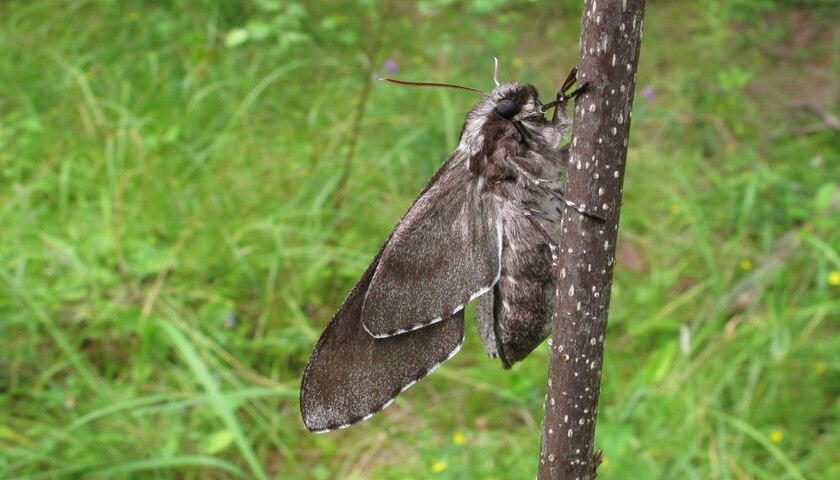
Why do pine hawk moth Sphinx pinastri threaten conifers?

The pine hawk moth, Lat: Sphinx pinastri, is a butterfly of the hawk family that is a pest of pine forests of the European continent, Asia, North Africa and North America. In recent years, this moth is increasingly settled in pine forests of Ukraine. The pest insect feeds on needles, so its activity can cause […]

December 29, 2023

The pine moth is a dangerous pest of coniferous plants

The pine moth (Panolis flammea) is a species of butterfly in the moth family (Noctuidae) that inhabits pine forests in Europe. This pest can cause significant loss of coniferous plants, particularly pines, by eating its needles, branches and bark. In this article we will look at the peculiarities of biology, distribution, symptoms of infestation and […]

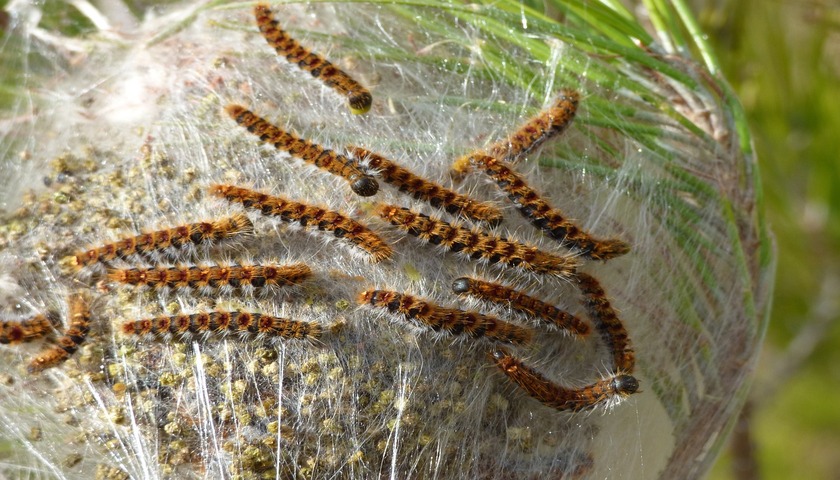
Silkworm caterpillar

December 8, 2023

Pine silkworm Dendrolimus pini. Interesting facts

The pine silkworm Dendrolimus pini is a nocturnal butterfly that belongs to the family Lasiocampidae. This insect is one of the most widespread and dangerous pine pests in Ukraine and other countries.The pine silkworm can cause significant damage to forestry as it damages needles, reduces wood productivity and quality, and promotes the development of other […]

Ophiostoma fungi

December 5, 2023

Ophiostoma fungi and the bark beetles that transfer it

The Ophiostomatales are a group of fungi that cause diseases in trees, animals and humans. Ophiostomatal fungi belong to the type Ascomycota, class Sordariomycetes, order Ophiostomatales. A characteristic feature of ophiostomal fungi is the presence of special structures – ophiostomes, which are narrow tubes through which the fungal spores pass. Ophiostoma fungi can be saprotrophs, […]

December 2, 2023

Melampsora pinitorqua Rostr. Symptoms and prevention

Melampsora pinitorqua Rostr it is a fungal disease of pine trees caused by the fungus Melampsora populnea. The fungus has two types of plants on which it develops and multiplies: pine, aspen or poplar. The disease has this name because it bends the branches of the tree. On aspen, the fungus causes white or pink […]