
Green Clinic field note
Lamprodila Palmar festiva (L.) Coleoptera: Buprestidae. How to protect thuja, juniper cypresses?

Have you ever noticed changes in the colour of the needles in the middle of the surface of thuja, juniper, cypress branches – all these can be signs of the “work” of an invasive pest – Lamprodila (Palmar) festiva (L.) Coleoptera: Buprestidae
First signs of the Lamprodila (Palmar) festiva
The larvae of this insect gnaw through the conductive bundles that supply nutrients to the branches. This is the reason for the discolouration of the needles and drying out. The branches of the plant dry up, and you can see the passages that the insect leaves as a result of its activity. This dangerous pest that damages thuja, juniper, cypresses, and cypress trees can already be seen in Kyiv, not just in the South of Ukraine. The insect is native to the Mediterranean, North Africa, Southern Europe, and southern Central Europe.
Larvae of the rainbow cypress moth
Plants damaged by the Lamprodila Palmar festiva dry out, but this process is gradual and can take 2-7 years, depending on the size of the plant.
The insect pest can be seen on the surface of plants only during the flight period or after it has emerged, at other times the larvae are under the bark and do not appear on the surface. Please note: if you notice browning, drying of needles, cracks, resinous discharge, bark swelling, exfoliation, and flight holes, then contact a specialist immediately.
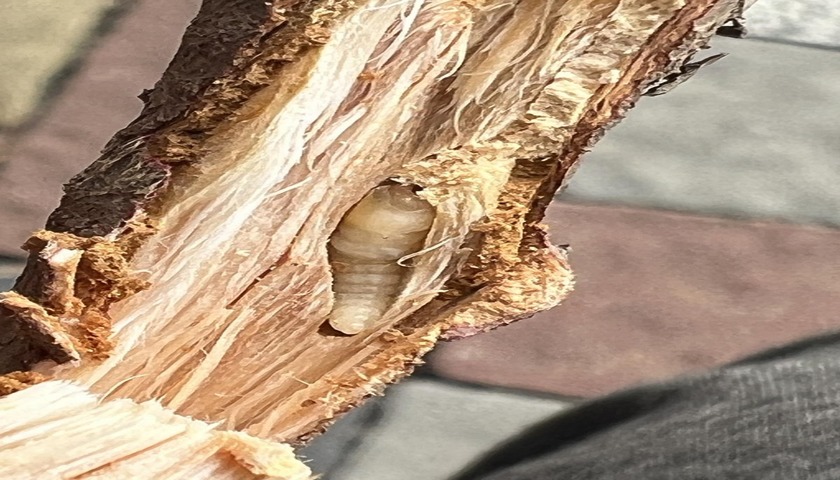
Consequences of the rainbow cypress moth
Features of the development of the Lamprodila (Palmar) festiva
The process of transforming a larva from an egg to a beetle takes two years. The larva lives protected by the bark, trunk and branches of trees, so it is difficult to destroy.
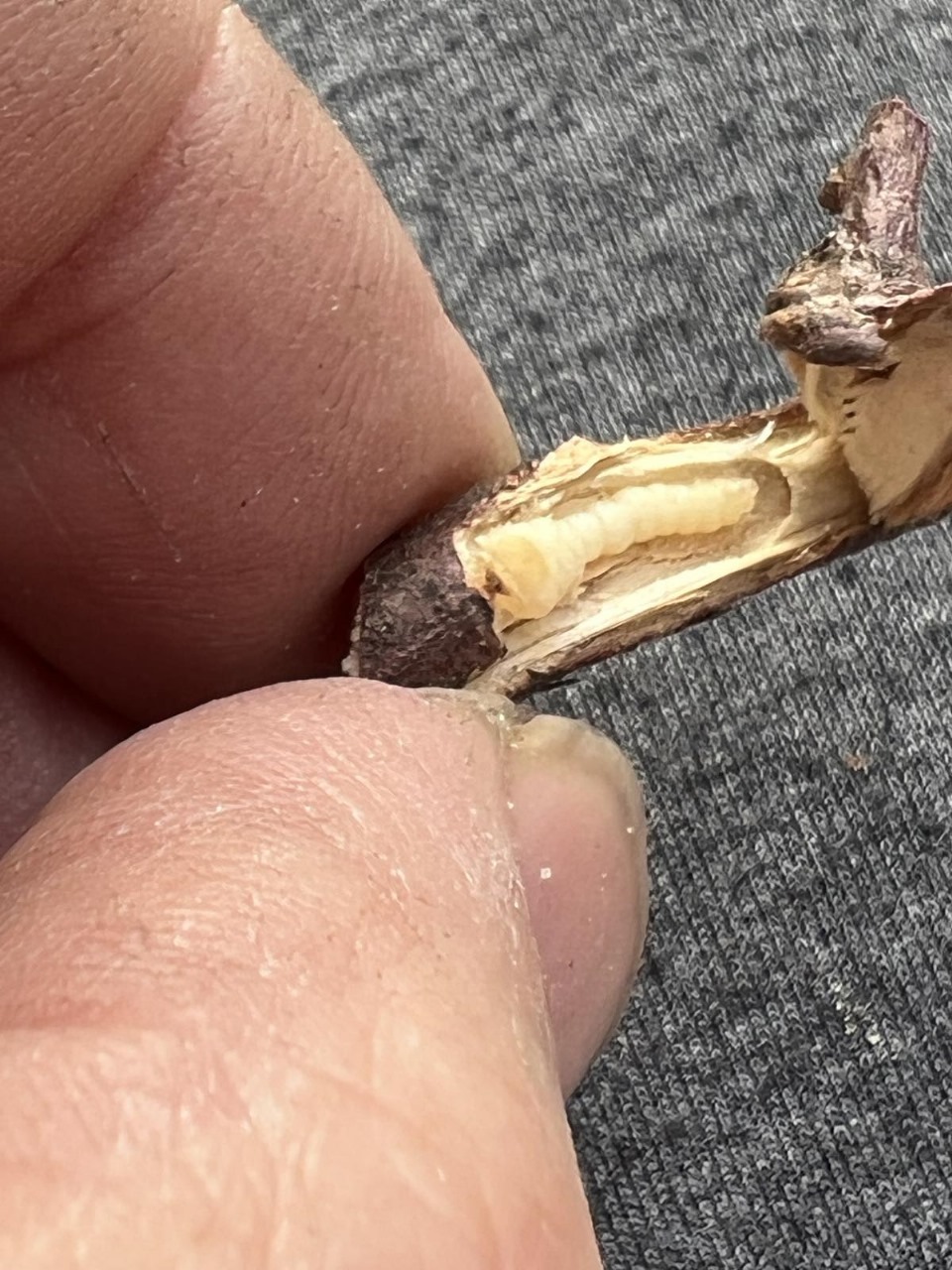
If you notice even the slightest signs of the Lamprodila (Palmar) festiva the best solution is to act without hesitation and seek professional help from the specialists of the Green Clinic Ecosystem Phytopathology Centre as soon as possible to protect plants and effectively eliminate the destructive effects of the insect, which disrupt the balance of the ecosystem as a whole, and not just harm individual plants that are usually used for landscaping.
To request a consultation, please call: +380632851405