
Green Clinic field note
Why do fruit trees get sick in spring?

In spring, when nature wakes up after winter sleep, fruit trees become especially vulnerable to various diseases. This period is characterized by active growth and flowering, but at the same time the risk of infection by various pathogens also increases. In this article we will consider the most common diseases affecting fruit trees in spring.
Before looking at specific types of diseases, it is important to understand why fruit trees become more susceptible to disease in the spring. Here are a few of the main reasons:
Weather conditions: Spring is often characterized by large fluctuations in temperature, rainfall and humidity. These conditions create an ideal environment for bacteria, fungi and other pathogens to develop.
Weakening after winter: After a dormant period in winter, fruit trees may be weakened and vulnerable to disease infection. Their defences may be reduced.
Fungal diseases such as: fruit rot, parsha, spot blight and others often affect fruit trees in the spring. During this period of the year, the humidity of the air and soil provides favourable conditions for fungal growth, especially if rainfall is very intense. Fungi can infect leaves, shoots and even fruits, leading to rot and yield loss.
Pests also become active in the spring and can leave fruit trees without a crop. These pests include: leafhopper moths, fruit-eaters, which start their active life together with the awakening of nature. The activity of these insects leads to exhaustion of the tree and deterioration of its health.
Insufficient protection against pests and fungi can lead to the spread of diseases and plant death. Careful plant care significantly reduces the risk of disease.
The most common fruit tree diseases in spring
One of the most common diseases of fruit trees is spot blight, which affects all above-ground parts of the plant. The disease is actively spreading in April and May, when trees are budding and forming leaves.
The young leaves show velvety spots with blurred edges that turn brown or olive in colour. These spots gradually thicken and deform, and a dark patina forms on the surface of the leaves. If the disease affects the flowers, it may cause them to drop, and dark, spongy patches appear on the fruit.
This becomes a threat to fruit crops. Leaf spots form in May and can vary in size and colour, usually rounded. In dry weather, the spots may dry out, forming holes on the surface of the affected area, and if the spots are wet, rot may form.
Cocomycosis is another fungal disease that can affect fruit trees as early as May. It starts with small red-brown spots that eventually merge into larger ones. On the reverse side of the leaf, whitish or pink swellings with fungal spores may form.
Cocomycosis Photo from Agrarians in Common website
Cocomycosisis manifested by leaf and flower discolouration, wilting and death. Fungal spores are quickly carried by pests or wind, which leads to the spread of the disease.
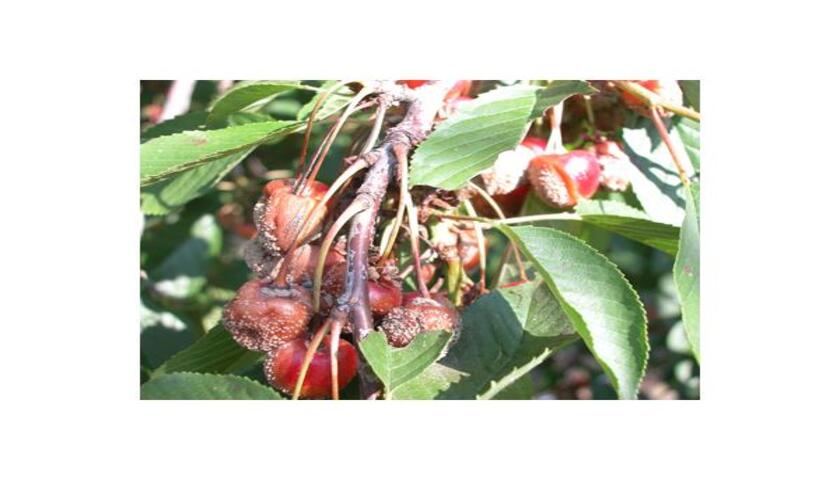
Moniliasis Photo from Agrarians in Common website
Methods of prevention and protection of fruit trees
If you want to effectively protect fruit trees in spring, take into account these tips:
- Choose resistant varieties: Choose fruit tree varieties that are known for their disease resistance.
- Adequate nutrition and watering to maintain healthy growth of fruit trees.
- Creating conditions for healthy plant growth, particularly proper care and use of well-drained soils.
As practice shows, the health of fruit trees in spring directly affects the quantity and quality of the harvest. Therefore, careful care and timely identification of problems is an important part of successful horticulture.
If you need expert advice on fruit trees care, and are interested in modern solutions of protection, prevention of various diseases without damage to the crop, plant health and environment, please contact us at +380632851405.