
Green Clinic field note
Yellow Pine Needles in Spring or Summer: What It Means
Yellow pine needles outside the usual shedding period may reflect heat, water stress, mites, needle disease or root problems.
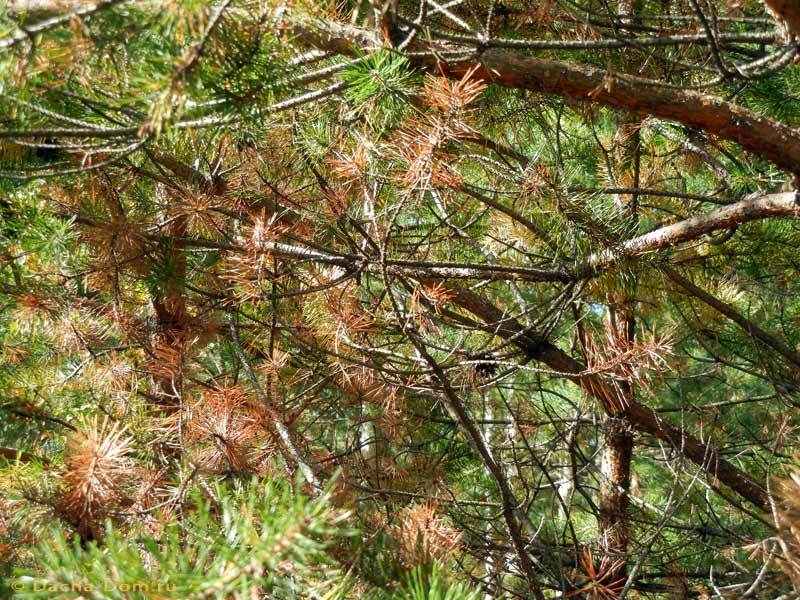
Yellow pine needles in spring or summer deserve closer attention because normal shedding is usually most visible later in the season and mainly affects older inner needles. The timing, needle age and distribution of symptoms help distinguish stress, mites, disease and root problems.
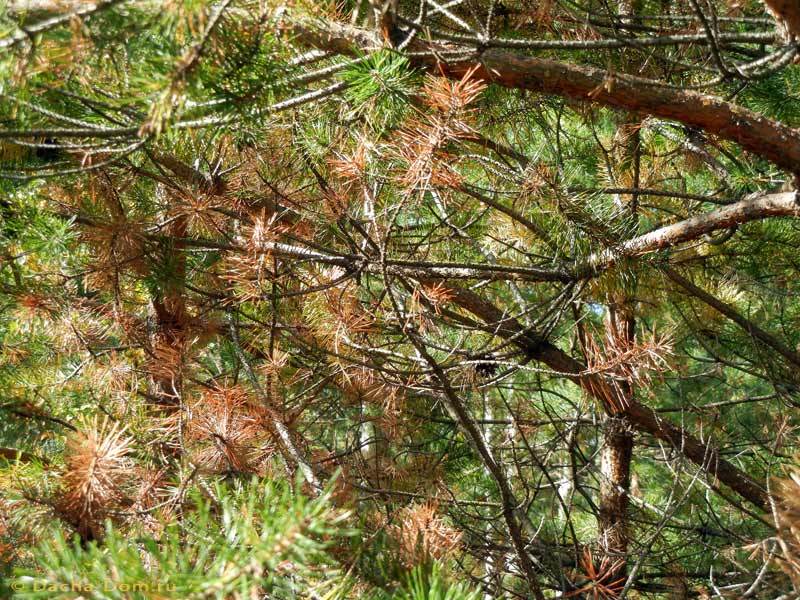
First check the needle age
If only the oldest needles inside the crown are yellow while shoot tips remain healthy, the tree may be replacing foliage normally. Yellow current-year needles, rapid browning or decline on one side is more concerning.
Heat and water stress
High temperatures increase water loss, while compacted, damaged or waterlogged roots restrict supply to the crown. A pine may therefore yellow even where irrigation is frequent. Check moisture below the surface and how water moves through the site.
Mites and other pests
Spider mite feeding can create fine pale stippling that later merges into yellow or bronze areas. Bark beetles and shoot pests leave different evidence, including holes, boring dust, resin and fallen shoots.
Did yellowing begin in spring or summer? Send the full crown, current and older needles, the trunk base and the surrounding soil.
Needle diseases
Needle cast, Dothistroma and other infections may produce bands, spots or black fruiting structures before needles are shed. The pathogen cannot be identified reliably from yellow colour alone, and treatment timing depends on its life cycle.
Nutrients and roots
Deficiency is only one possible explanation. Unsuitable pH, excess salts and impaired roots can make nutrients unavailable even when they are present. Fertilisation should follow site assessment and, where useful, soil or tissue testing.
Integrated plant diagnosis separates normal needle replacement from a progressive problem. Where action is needed, it leads to a targeted pine treatment plan.
Is the yellowing reaching current growth?
Document the pattern before pruning or spraying so that the most useful diagnostic signs remain visible.