
Green Clinic field note
Pale Yellow Spots on Spruce and Fir Needles
Pale yellow spots followed by browning and needle loss may indicate Rhizosphaera needle cast or another foliage problem.
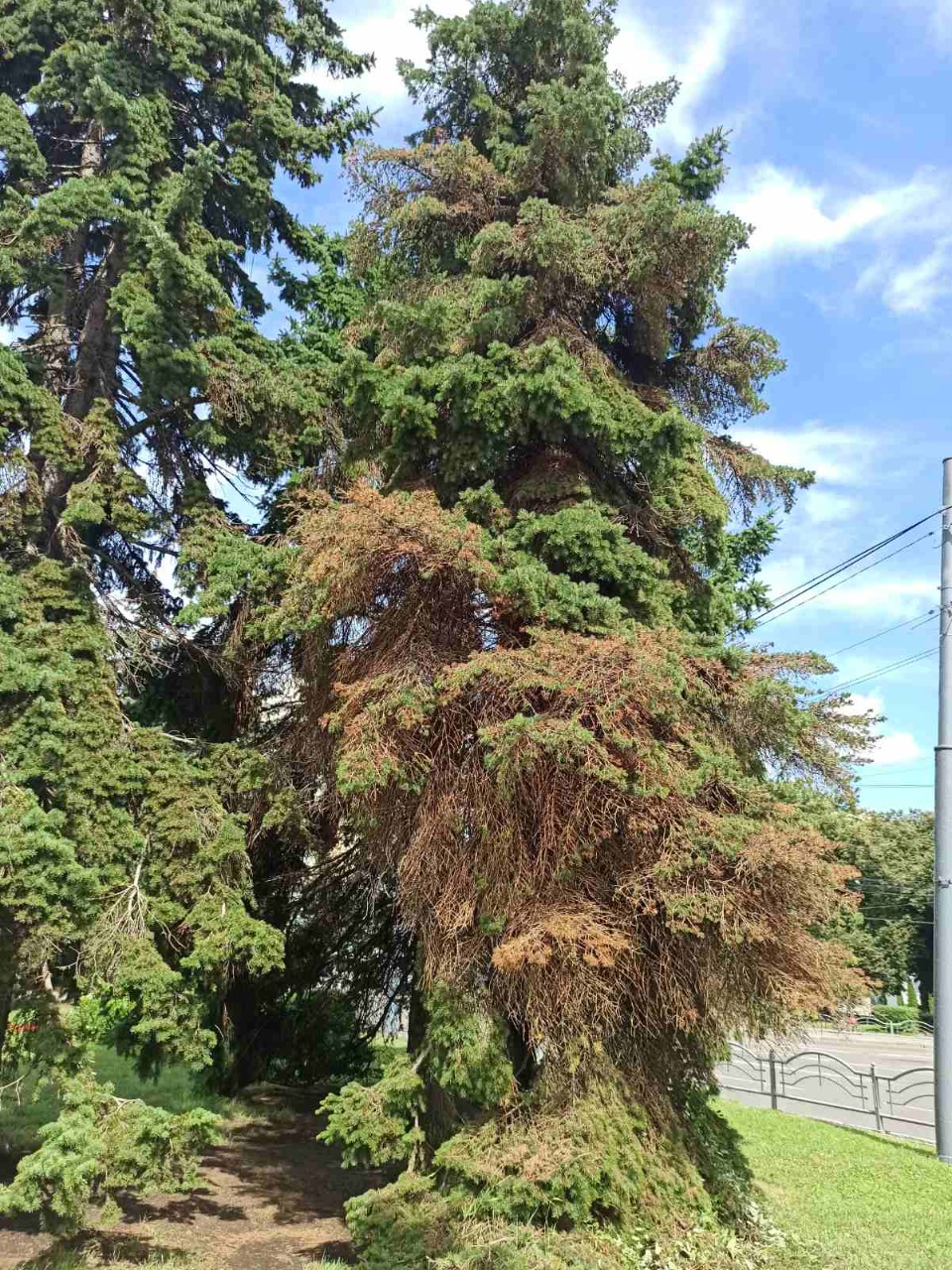
Pale yellow spots that expand, darken and lead to premature needle loss may be associated with Rhizosphaera needle cast. Similar symptoms can result from other fungi, mites and root stress, so the needle pattern and fungal structures should be examined before treatment.
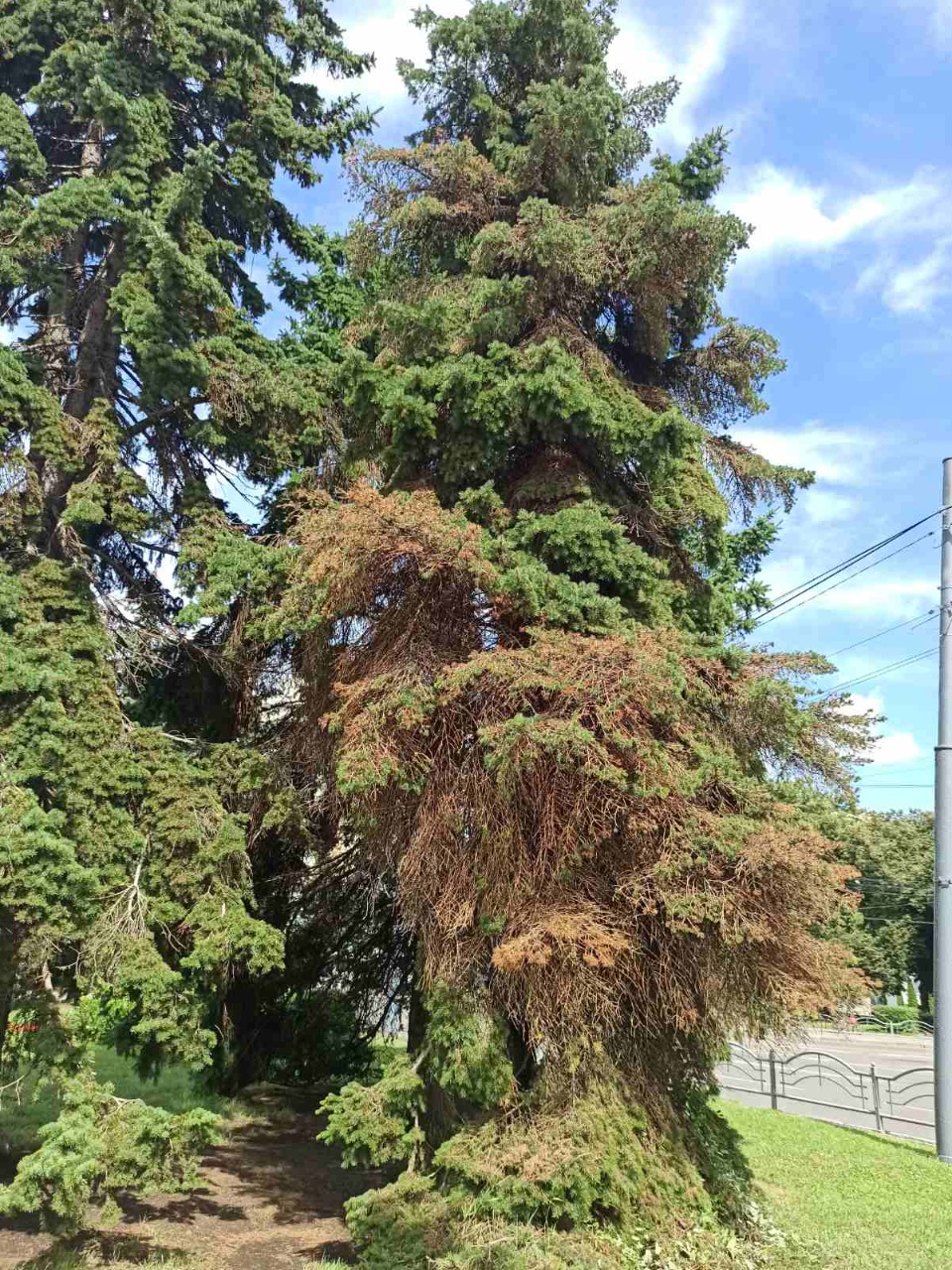
Typical pattern
- small yellow or chlorotic spots develop on older needles;
- needles gradually turn brown or purplish and fall prematurely;
- tiny black fruiting structures may replace the normal white stomatal dots;
- damage often begins on lower or inner branches;
- repeated infection causes thinning over several seasons.
Found spots or black dots on spruce needles? Send the whole tree, lower branches and clear close-ups of both sides of the needles.
Conditions that favour disease
Extended needle wetness, dense planting, poor airflow and susceptible stressed plants can increase disease pressure. Lower branches may remain wet longer after rain, irrigation or snowmelt.
What can look similar?
Other needle cast fungi, spider mites, drought, winter injury and impaired roots can all cause yellowing and needle loss. A laboratory or microscopic examination may be useful where the visible pattern is inconclusive.
What to do
- photograph symptoms before removing branches;
- avoid regular overhead irrigation where practical;
- improve airflow without excessive pruning;
- remove heavily affected fallen needles without disturbing roots;
- time protective treatment to the confirmed pathogen rather than visible colour alone.
Professional diagnosis relates needle symptoms to crown and site condition. If treatment is needed, it can be included in a broader conifer care programme.
Is needle loss progressing upwards?
Early identification helps protect new growth before repeated infections thin the crown.