
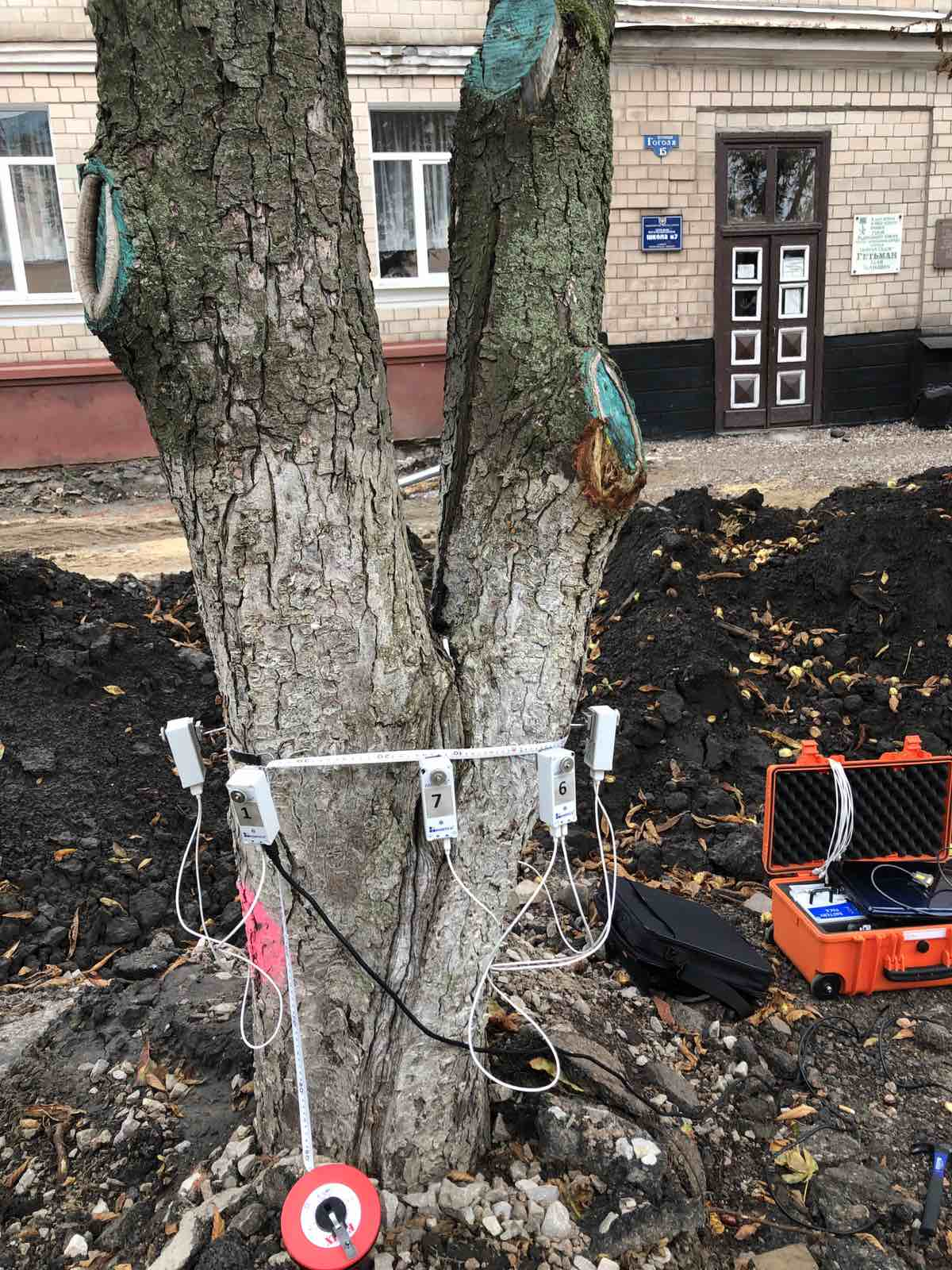
Impulse diagnostics can reveal internal cavities, decay and weakened wood without cutting into the trunk. The findings help relate hidden damage to visible symptoms and support decisions about monitoring, treatment or risk reduction.

What tree tomography can show
- hidden cavities and areas of degraded wood;
- the position and approximate extent of internal decay;
- the relationship between sound and damaged parts of the cross-section;
- change over time when measurements are repeated;
- evidence that supports further safety assessment.
Need to assess the inside of a tree? Send an overall view, the trunk and base, and briefly describe what is causing concern.
How an impulse tomograph works
Sensors are positioned around the trunk. The instrument measures how long sound impulses take to travel between points and produces an image of the cross-section. Sound wood and areas with degraded structure transmit the signal differently.
When the assessment is useful
- a cavity, crack, fungal fruiting body or old wound is present;
- the tree stands near a building, path or frequently used area;
- a valuable or mature tree is being assessed before site work;
- external signs do not reveal the extent of internal damage;
- the trunk needs to be monitored over time.
Tomography is one part of an integrated assessment, not a stand-alone declaration of safety. Results are interpreted alongside crown architecture, roots, trunk defects and likely loads. Where necessary, it complements professional plant diagnosis and a tree treatment plan.
Get an evidence-based assessment of the trunk
A specialist will select the measurement points, interpret the tomogram and explain what action is warranted.