
Green Clinic field note
Why Pines Dry Out: Signs of Ips acuminatus
Fading crowns, fallen shoots, entry holes and boring dust may indicate Ips acuminatus activity in a stressed pine.
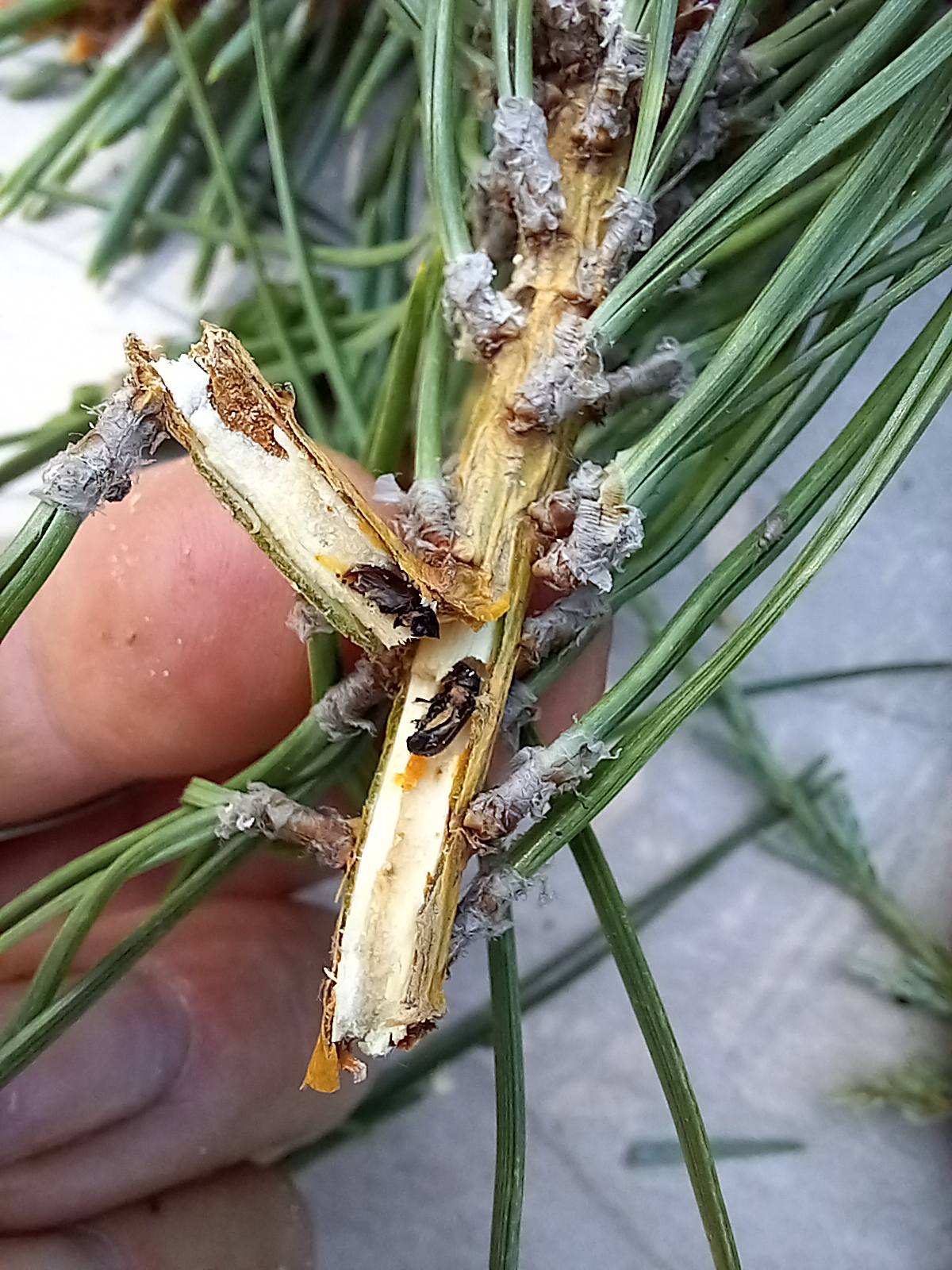
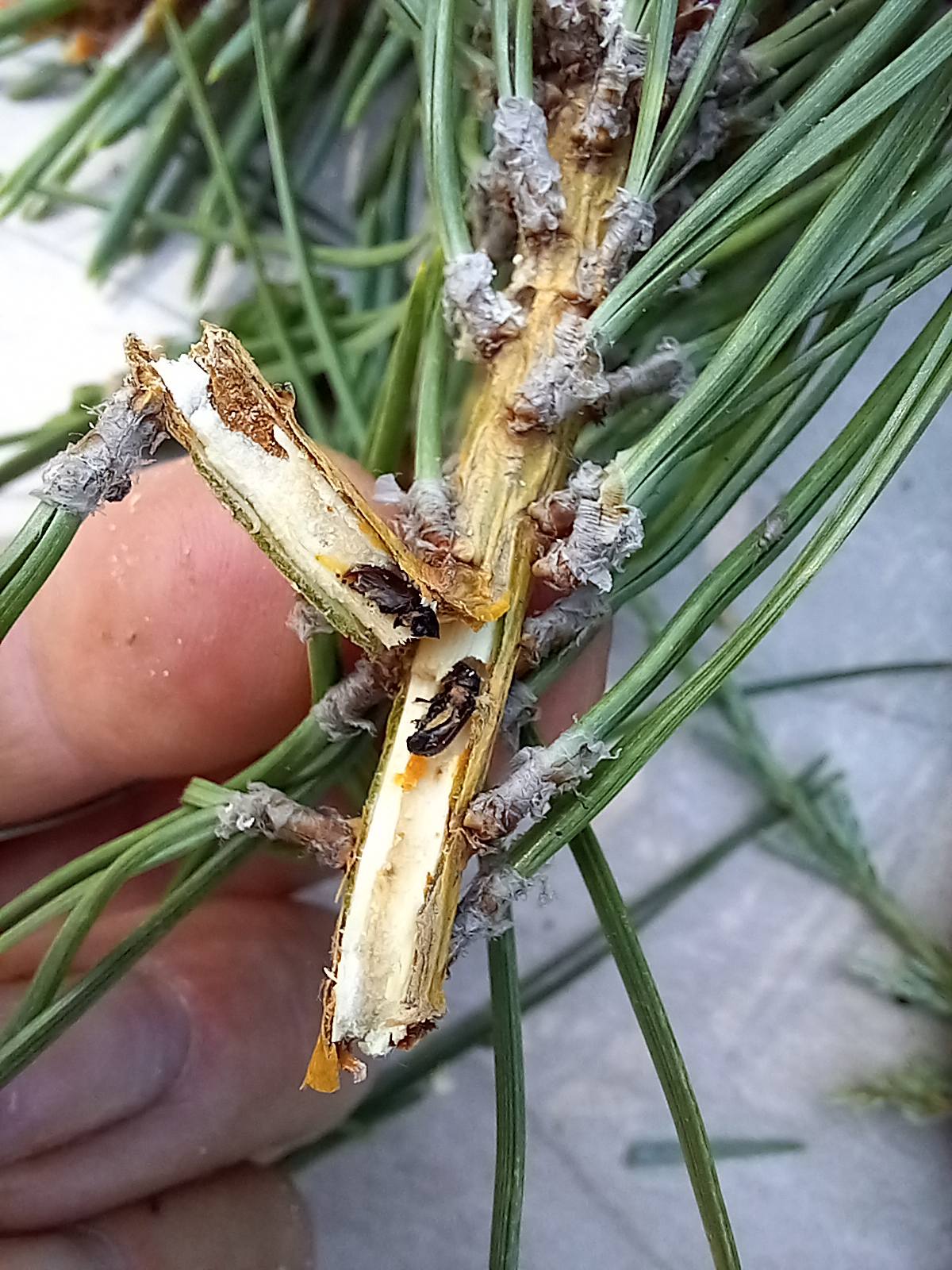
A rapidly fading upper crown, small entry holes, boring dust and freshly fallen shoots may indicate activity by Ips acuminatus. The beetle commonly exploits stressed pines, so diagnosis should include both evidence of the insect and the conditions that weakened the tree.
What is Ips acuminatus?
Ips acuminatus is a bark beetle associated with pine, often colonising the thinner bark of the upper trunk and branches. Drought, heat, root injury, soil compaction and construction stress can reduce a pine’s ability to resist colonisation.
Warning signs to check
- the upper crown fades from green to yellow or reddish brown;
- fresh short shoots or twig sections appear beneath the tree;
- small round entry holes are present in the bark;
- fine boring dust collects in bark crevices or on branches;
- galleries are visible beneath loose bark;
- similar decline develops in neighbouring stressed pines.
Found holes, boring dust or fresh fallen shoots? Send the full crown, trunk, base and a representative close-up before cleaning or treating the bark.
Why the primary stress matters
Beetle activity and tree stress often reinforce one another. Treating the crown alone cannot correct damaged roots, prolonged drought or waterlogged soil. Conversely, holes in dead bark do not prove that the beetle caused the initial decline. The urgency depends on the condition of the crown and whether colonisation is active.
What to do before an inspection
- photograph the tree and symptoms from several sides;
- check nearby pines for the same pattern;
- note recent excavation, irrigation changes and severe drought;
- do not seal holes or remove diagnostic bark before documentation;
- avoid indiscriminate spraying without confirming the target and timing.
An integrated plant diagnosis combines insect evidence with crown and root-zone condition. Where the pine can be retained, this leads to an individual pine treatment and support plan.
Is the upper crown changing quickly?
Early assessment is important because options become limited after most of the crown has turned brown.