
Green Clinic field note
Conifer Diseases in Summer: How to Recognise the Problem
Summer needle spots, browning and shedding may indicate disease, heat stress or root-zone problems.

Needle spots, bands, rapid browning and premature shedding in summer can indicate fungal disease, but heat, drought, excess moisture and root injury can look similar. Begin by recording where symptoms occur and how the whole tree is changing.
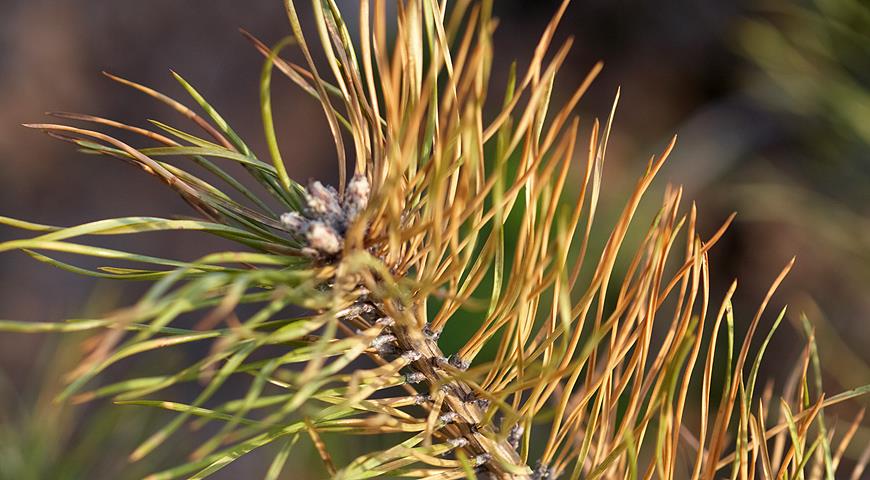
Symptoms that appear in summer
- yellow, reddish-brown or dark needle spots;
- transverse bands and small dark fruiting structures;
- browning that progresses from lower branches;
- dieback of current-year shoot tips;
- premature loss of older needles;
- decline concentrated in one crown sector.
Is needle colour changing unevenly? Send the whole tree, one affected branch and the boundary between green and damaged needles.
Common groups of causes
Needle and shoot infections
Dothistroma needle blight, needle cast, Diplodia and other diseases differ in lesion pattern, needle age and seasonal development. Microscopic or laboratory examination may be required.
Heat and water stress
High temperatures increase water loss. Damaged or oxygen-deprived roots may fail to supply the crown even where irrigation is frequent. Adding more water without checking the soil can worsen the problem.
Root-zone problems
Compaction, waterlogging, added soil and trenches near a tree may become visible in the crown months later. When one sector declines, review what changed on that side of the site.
What to check before treatment
- whether current-year or older needles are affected;
- whether symptoms are uniform or confined to one sector;
- resin, holes and bark injury;
- changes in irrigation, drainage and soil level;
- similar symptoms on neighbouring plants.
Why there is no universal spray
A fungicide cannot restore damaged roots, and an insecticide will not correct non-infectious yellowing. Effective timing also depends on the life cycle of the pathogen. Establish a working diagnosis first, then choose monitoring and treatment.
Integrated plant diagnosis separates infection from site problems. Where needed, this leads to a tailored pine and conifer treatment plan.
Is browning spreading?
Document the pattern before pruning or spraying. A short photo sequence often provides important diagnostic evidence.