
Green Clinic field note
Wet Snow on Conifers: What to Do When Branches Bend or Crack
Heavy wet snow and ice can spread stems and break branches. Striking a frozen crown or pruning too soon may increase the damage.
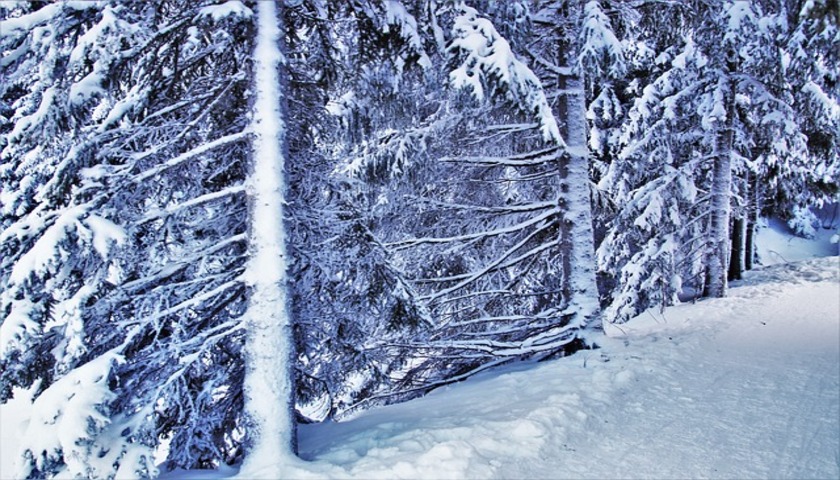
Wet snow and ice do more than add weight. They spread multi-stemmed crowns and extend hidden cracks. Assess safety first and only then approach the crown.

Why wet snow is more damaging
Wet snow adheres to foliage and accumulates across a large crown surface. Dense arborvitae, junipers, multi-stemmed conifers, trees with two leaders and narrow branch unions are especially vulnerable. Wind adds lateral loading.
What can be done during snowfall
On a low, safely accessible plant, soft snow may be removed gently from below with a soft broom or by supporting a branch. Do not strike the crown. Leave high branches, wires and roof areas to professionals. Do not tear away ice or use hot water.
Did the condition change after a storm or winter maintenance? Show the whole plant, symptom and surrounding site.
What not to do after the storm
Do not hit a frozen crown, pull branches down or bind cracked stems with thin wire. Do not remove a heavy branch with one cut because it can strip bark below the cut.
How to inspect after thawing
View the tree from every side. Look for fresh pale cracks, separated bark, spreading stems, changed branch angles and hanging parts. Assess the leader and the proportion of live crown lost.
A quick assessment map
| What you see | What to check |
|---|---|
| Branch only bent | Wait for thaw and monitor position |
| Fresh crack | Avoid loading, photograph and arrange inspection |
| Branch hangs over a path | Close the area and call a specialist |
| Two stems spread apart | Do not bind without assessment |
| Tree developed a lean | Assess the root plate urgently |
Can a branch be retained?
Minor bending without a crack may partly recover. Splits are assessed by diameter, depth, position and load. Improvised binding does not guarantee restoration of conducting tissues.
When this becomes a safety issue
Close the area beneath a large damaged branch over a house, vehicle or entrance. Urgent inspection is appropriate after new lean, a split between stems, soil lifting near roots or cracking sounds.
Is there a sign that cannot be assessed remotely? Avoid irreversible work before documentation and inspection.
Useful photographs
Include the whole tree and surroundings, crown from four sides, the crack with scale, trunk base and the target beneath the branch. Never stand under it for a close-up.
Professional plant diagnosis connects symptoms with site history and root-zone conditions.
How to prepare conifers for the cold season
Does the tree or conifer need assessment?
Send photographs and a short timeline to determine the next step.
What to do with a crack before inspection
Do not test a cracked branch or stem by pulling or rocking it. Exclude people from the area beneath the damaged part and observe from a safe position. Temporary support may sometimes be appropriate, but its location and load should be designed rather than improvised: a poorly placed prop can redirect force and open the split further.
Photograph the crack when discovered and again after thawing. Comparison can reveal movement without touching the tree. If the opening increases, cracking sounds occur or the branch changes position, safety takes priority over retaining its ornamental shape.
Why final pruning is not always immediate
Hazardous hanging material requires prompt professional removal, but the full restoration plan may follow assessment of living tissue and tree structure. On conifers, old bare wood cannot be assumed to produce new needles. Removing the central leader incorrectly may also create competing leaders that are more vulnerable to later snow and wind.
After immediate hazards are managed, monitor buds, new growth and the response of the remaining crown. Heavy fertilisation does not repair a structural split and may stimulate growth that an injured root system cannot supply with water.
Frequently asked questions
Should all snow be knocked off?
No. Intervene only where a heavy mass is clearly deforming accessible branches.
Can ice be melted with warm water?
No. Water may refreeze and add load.
When should a broken branch be pruned?
Hazardous hanging parts require prompt professional work; final pruning follows assessment.
Will spring fertiliser help?
Fertiliser cannot repair a split; assess crown loss, wound and roots first.