
Green Clinic field note
Pine Needles Turning Yellow in Autumn: Normal Change or a Problem?
Pines may shed older inner needles in autumn, but changes in current growth, the leader or one crown sector warrant assessment.
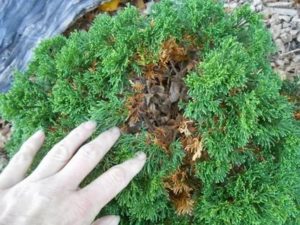
If mainly older needles inside the crown turn yellow in autumn while current shoot tips and buds remain green, the change may be normal renewal. Changes in current-year needles, the leader or one side require broader assessment.

Why an evergreen sheds needles
Pines retain several generations of foliage and gradually shed the oldest. In autumn this is often visible close to the trunk while outer shoot tips remain green.
Features consistent with normal shedding
Normal shedding usually affects old inner needles uniformly while current growth remains healthy.
- Are only old needles changing? Are buds alive? What changed near the roots? Is there resin or boring damage?
- Compare the tree with neighbouring plants and earlier photographs.
Are only old needles changing? Are buds alive? What changed near the roots? Is there resin or boring damage?
When autumn yellowing needs investigation
Current-year needle change, leader dieback, a defined brown sector, rapid spread or one tree differing from its neighbours deserve attention. Resin, cracks, holes and water at the trunk base also matter.
Five questions about the site
Similar colours can result from drought, saturated oxygen-poor soil, root injury, infection and insects. Colour is a symptom, not a diagnosis.
What to do before diagnosis
Photograph the tree and compare it in 7–10 days. Do not increase irrigation solely because needles look dry, and avoid broad pesticide mixtures without a diagnosis.
Are only old needles changing? Are buds alive? What changed near the roots? Is there resin or boring damage?
When diagnosis is appropriate
Do not delay when changes progress quickly, the leader dies back, resin appears or the tree weakens after ground works. Professional plant diagnosis connects visible symptoms with site history and root-zone condition.
Autumn guide to preparing conifers for cold weather · Pine diagnosis and treatment
Are only old needles changing? Are buds alive? What changed near the roots? Is there resin or boring damage?
Take an overall photograph, a close-up and record the exact location of the change.
How to read the position of change in the crown
Old inner needles and current growth have different diagnostic value. Uniform loss of the oldest generation with living buds can be natural. Dieback of the leader, one large branch or a defined side of the crown points toward a local factor such as root injury, altered water movement, a wound or a disease focus.
View the tree from a distance and then close up. The overall view shows symmetry; close photographs reveal spots, bands and bud injury. Do not remove all affected shoots before documenting their position.
A short sign map
| What you see | What to check | Why it matters |
|---|---|---|
| Old inner needles yellow | Current shoots and buds | May fit natural shedding |
| One crown side declines | Trenching, paving or compaction there | May indicate local root impact |
| Shoot tips turn brown | Buds, live-tissue boundary and resin | Not the usual old-needle pattern |
| Holes or boring dust appear | The entire trunk and major branches | One sign does not identify the insect |
| Trunk base is wet or buried | Root flare, irrigation and drainage | Root-zone stress appears in the crown |
Why soil moisture cannot be judged from the surface
A wet surface does not prove that water reached active roots evenly. Turf may be damp after frequent shallow irrigation while soil below remains dry. In heavy compacted soil, retained water can instead displace oxygen.
Check several points under the crown and consider slope, downpipes, irrigation and new paving. Record when conditions changed because needle response may lag behind the initiating event.
Photographs useful for initial assessment
- the whole tree with surrounding site;
- the crown from four sides;
- the boundary between green and affected needles;
- current shoots and terminal buds;
- trunk, resin, holes and wounds;
- the trunk base and soil surface.
Add a timeline, irrigation pattern, recent works and previous treatments. Context is more useful than a product name.
Frequently asked questions
Can one photograph establish the cause?
A photograph helps direct the assessment but does not always replace inspection.
Should I treat just in case?
No. Separate the symptom, risk factor and confirmed diagnosis first.