
Green Clinic field note
Pine Decline After Site Changes: 7 Causes to Check
Why a pine may yellow or decline after construction, new lawn, irrigation or paving: seven site changes, symptom patterns and a diagnostic checklist.
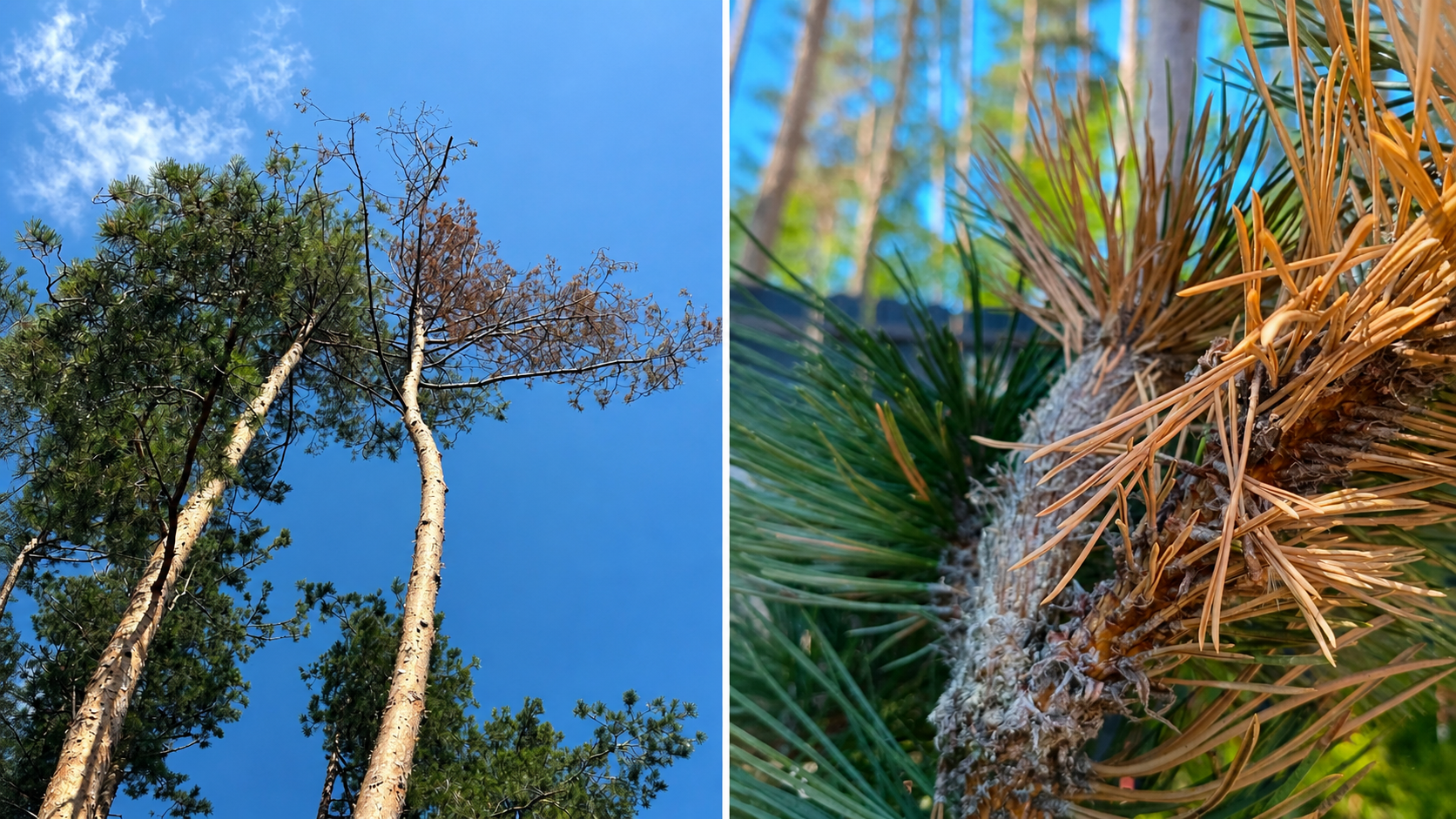
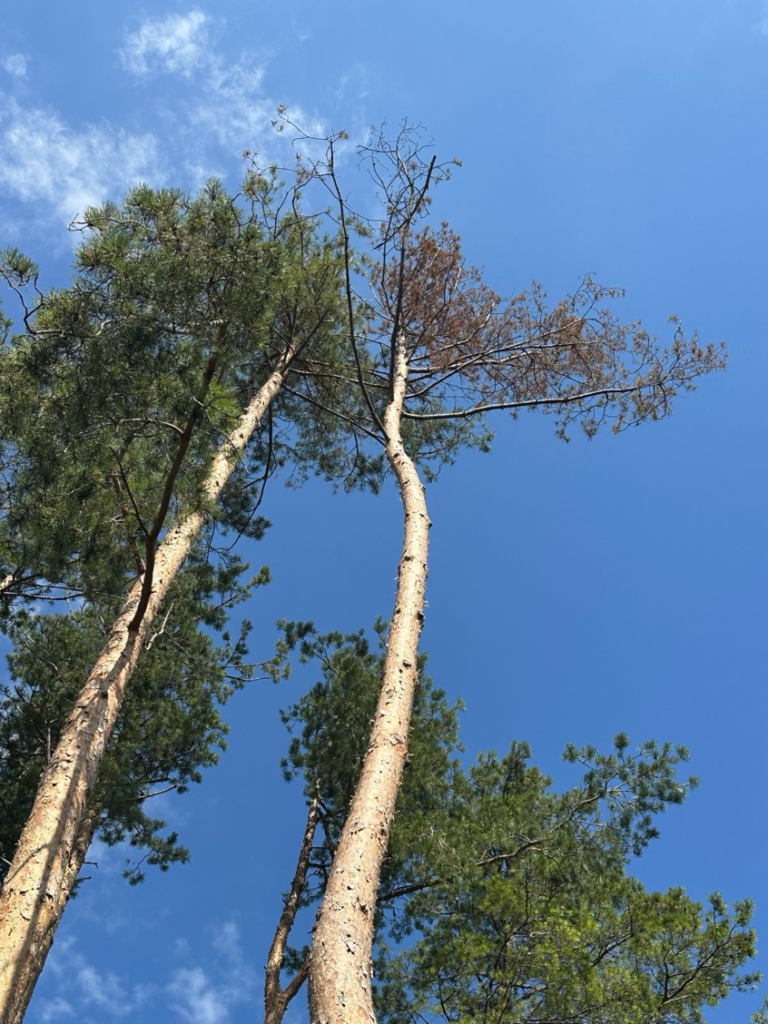
If a pine begins to yellow or decline after construction, lawn installation, irrigation work or new paving, the cause may not be heat or pests alone. Changes around a tree can compact soil, alter the movement of water and air, or sever roots. Crown symptoms may appear months later, so the sequence of events on the site matters more than choosing a product from needle colour alone.
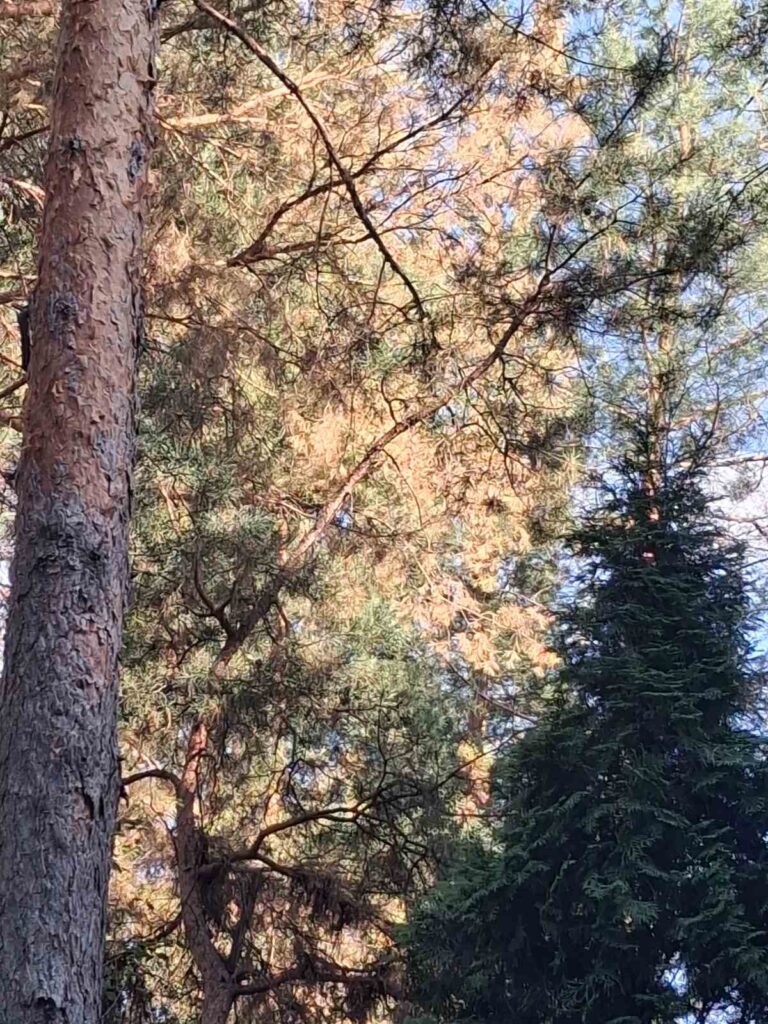
Why site changes become visible in the needles
Roots do more than anchor a tree. They absorb water and nutrients, respire and interact with soil organisms. When pore space is compressed, water and air move less freely and root growth is restricted. Construction injury can therefore resemble insufficient watering even when water is present.
The process often forms a chain: altered root-zone conditions → loss of functioning roots → reduced water supply to the crown → yellow or brown needles → greater susceptibility to pathogens and insects. A crown spray alone will not necessarily address the initiating cause.
Did the problem begin after work on the site? Tell us what changed around the tree and show the pine to a specialist. This helps establish where the assessment should begin.
Seven changes that can weaken a pine
1. Machinery and stored materials beneath the crown
Excavators, loaders and repeated vehicle traffic compact soil. The same happens when pallets, sand or building materials remain in the rooting area. Most absorbing roots occupy a broad area rather than the space immediately beside the trunk. An intact trunk does not mean the tree escaped injury.
2. Trenches, edging and paths
Installing cables, drains, irrigation or kerbs may cut roots along one side of the tree. This affects both resource uptake and mechanical stability. When work is still being planned, route it around the rooting area before excavation begins.
3. Raising the soil level around the trunk
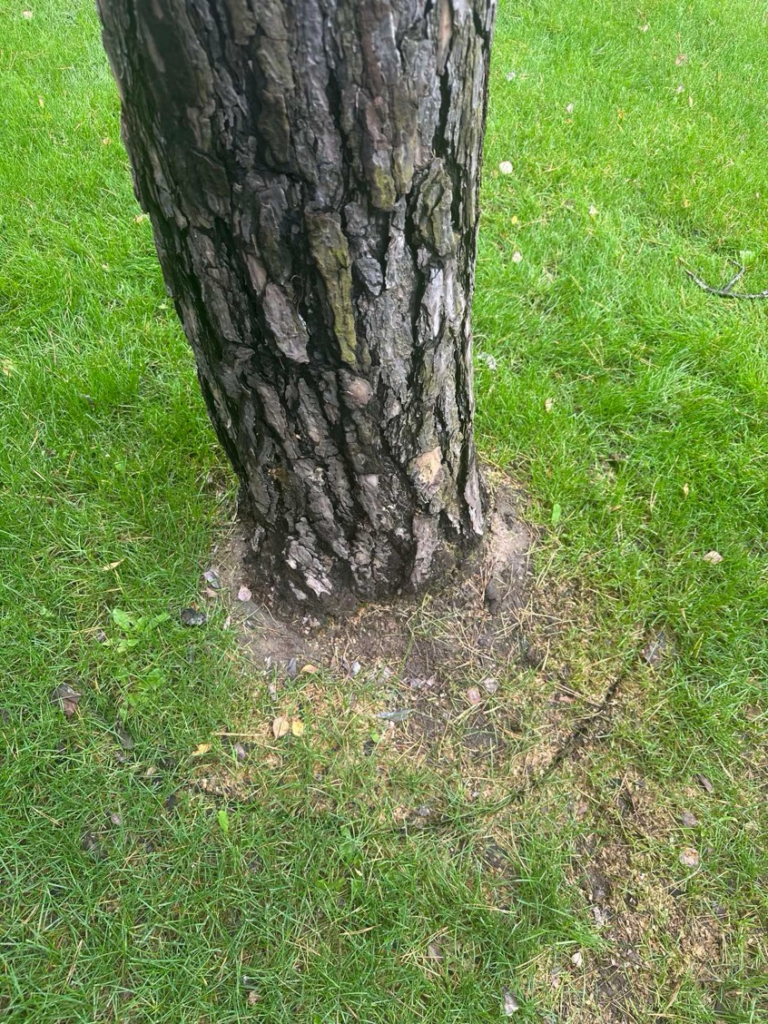
After grading, the trunk base may sit below the new soil level. Moisture persists against the bark while gas exchange in the upper soil declines. The transition from trunk to roots should remain visible, not buried by fill, turf or a deep mulch layer.
4. Irrigation designed for lawn
A mature pine and turf have different requirements. Frequent shallow irrigation may keep the surface wet without moistening the whole root volume appropriately. On heavy compacted soil, excess water also displaces air, while a sector beneath paving or near a foundation may remain dry.
5. Changed drainage and site grade
A retaining wall, new building, downpipes or paving redirect runoff. One area may become waterlogged while another develops a chronic water deficit. Assess not only how much water is applied but where it moves after rain.
6. Construction residues in the soil
Cement dust, lime-rich materials and debris can alter soil properties. Record where mortar was prepared, tools were washed or waste was buried. Symptoms sometimes appear first in the crown sector above these localised zones.
7. Sudden exposure to sun and wind
After neighbouring trees or structures are removed, a formerly sheltered crown receives more sun and wind. Water loss increases, while construction-damaged roots may be unable to meet the new demand. This is not an infectious disease, but a weakened tree still requires monitoring.
Symptom map: what to check first
| What you see | What it may indicate | What to check |
|---|---|---|
| Older inner needles yellow while shoot tips remain green | Possible normal seasonal needle shedding | Uniformity and current-year growth |
| One side of the crown yellows or wilts | Local root injury, a trench or compaction | Work performed on that side |
| Shoot tips turn brown | Water stress, root injury or shoot disease | The boundary of affected tissue, lesions and resin |
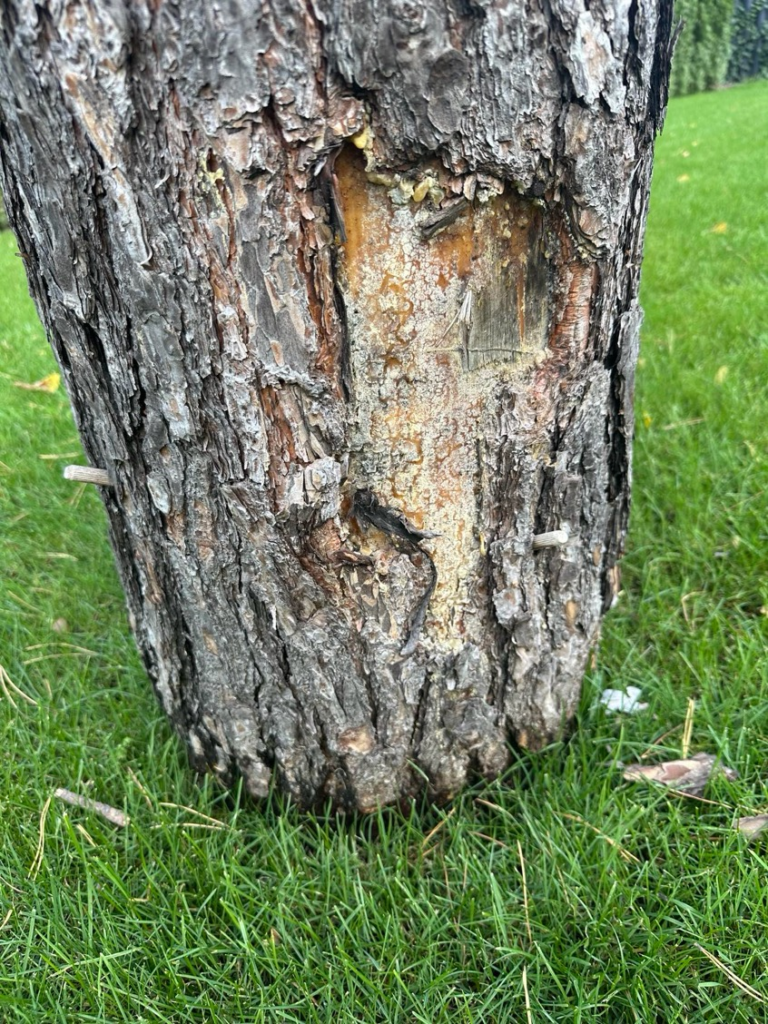
| Resin, holes or boring dust | Trunk injury or wood-boring insects | The entire trunk and branches, not one hole |
| The trunk base stays wet or is buried | Deep planting or excess moisture | Whether the natural root flare is visible |
Recognise one of these symptoms? Send an overall photograph of the pine, the trunk base and a close-up of the affected area. The images help us decide whether an on-site assessment is appropriate.
One symptom does not equal one diagnosis. Yellowing may accompany normal needle turnover, impaired roots, unavailable nutrients, infection or insect injury.
What to do before a professional assessment
- List work carried out within and just beyond the crown projection during recent years.
- Photograph the tree from four sides, the trunk base and representative symptoms.
- After rain, note where water stands and which areas remain dry.
- Mark trenches, machinery routes, material storage and changes in soil level.
- Compare current-year shoot extension with previous years.
- Do not remove suspect branches before photographing them; their position may be diagnostically important.
What not to do without a diagnosis
Do not increase irrigation solely because needles look dry: in compacted, saturated soil this may intensify oxygen deficiency. Do not fertilise without understanding the roots and soil. Combining fungicides and insecticides “just in case” will not restore severed roots, drainage or gas exchange.
Do not abruptly excavate large roots or remove a substantial soil layer beside a mature tree. After construction, both tree health and stability need to be considered.
When professional diagnosis is warranted
- symptoms affect one crown sector or spread rapidly;
- a trench, foundation or heavy machinery was present nearby;
- resin, cracks, holes or separating bark appear;
- the tree has changed its lean or its stability is uncertain;
- several pines decline in different patterns;
- previous treatments produced no result.
A professional plant diagnosis combines the crown, trunk and root-zone examination with the site history. Instrumental or laboratory tests may be added where appropriate. Only then can the need for pine treatment and a recovery plan be determined.
Did your pine change after work on the site?
Send an overall photograph, the trunk base, a close-up of the symptom and a short account of what changed nearby. This helps determine the first diagnostic steps and whether a site visit is needed.
Frequently asked questions
Can a pine begin declining a year after construction?
Yes. A tree may rely on stored resources while damaged roots decline gradually, making the connection with earlier work less obvious.
How can I tell whether a pine is overwatered?
Needles alone are not enough. Check soil moisture and structure at several points, drainage and irrigation timing. Too much and too little water can produce similar crown symptoms.
Will fertiliser help yellow needles?
Not necessarily. If roots are severed, oxygen-deprived or waterlogged, additional nutrients will not correct the cause.
Which photographs are useful for an initial review?
Include the whole tree and site, the crown from different sides, the trunk base, the boundary between healthy and affected needles, bark injuries and recent work areas.