
Green Clinic field note
Dothistroma Needle Blight of Pine: Symptoms and Management
Red bands, black fruiting bodies and premature needle loss may indicate Dothistroma needle blight in pine.

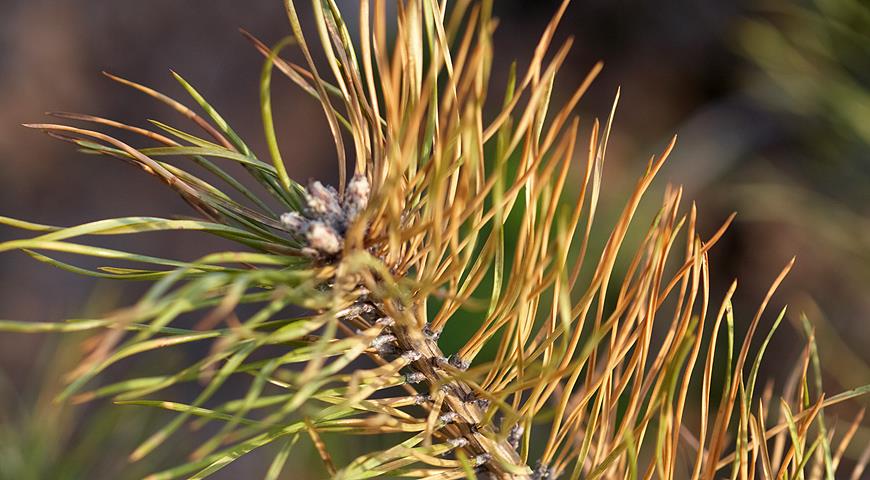
Dothistroma needle blight often produces yellow, reddish-brown or dark transverse bands on pine needles, followed by browning above the lesion and premature needle loss. Other needle diseases and site stress can look similar, so management should follow an assessment of the entire tree and its growing conditions.
What is Dothistroma needle blight?
Dothistroma needle blight, commonly associated with Dothistroma septosporum, is a fungal disease of pine needles. Repeated severe infection reduces the amount of green foliage available for photosynthesis, thins the crown and can progressively weaken the tree.
Typical symptoms
- yellow or brown spots and transverse bands form on needles;
- some bands develop a distinctive reddish tone;
- the needle browns from the lesion towards the tip while the base may remain green;
- small black fruiting structures emerge from affected tissue;
- older needles fall early, leaving shoots with a tufted appearance.
Found red bands or black dots on pine needles? Send an overall view of the tree, one affected branch and several close photographs of the needles.
What can look similar?
Needle cast diseases, Diplodia shoot blight, drought, waterlogging, root damage, salt and sun injury can also cause browning or needle loss. Red bands are a useful clue, but diagnosis also considers needle age, the distribution of symptoms in the crown and the presence of fungal structures.
How infection spreads
Spores move mainly in water droplets and on infected plant material. Long periods of wet foliage favour infection. Dense planting, restricted airflow and irrigation that regularly wets the needles can increase disease pressure.
What to do if Dothistroma is suspected
- document symptoms before pruning or spraying;
- avoid evening overhead irrigation and prolonged needle wetness where practical;
- remove heavily affected fallen needles without disturbing surface roots;
- inspect neighbouring pines and the root-zone conditions;
- confirm the cause before choosing and timing protective treatments.
A professional plant diagnosis relates needle symptoms to crown and site condition. When Dothistroma is confirmed, an individual pine treatment and follow-up plan can be prepared.
Are needles continuing to brown and fall?
Early assessment helps separate infection from root or site problems and identifies the useful treatment window.